
Is the .45-70 Too Much Gun for Whitetails?
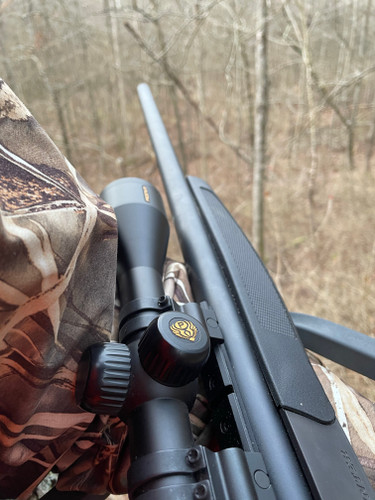
Ask a group of hunters whether the .45-70 Government is overkill for whitetails, and you’ll probably hear mixed opinions. Its reputation as a heavy hitting cartridge often leads people to assume it destroys excessive amounts of meat. In reality, that’s not how the .45-70 performs in the field.
The truth is, the .45-70 is not overkill for whitetail deer when it’s paired with the right bullet and proper shot placement.
It’s More Than Just Caliber
Many hunters assume a larger caliber automatically means more meat loss, but that’s an oversimplification. Several factors influence terminal performance, including bullet construction, bullet weight, impact velocity, and where the bullet strikes the animal.
The .45-70 typically fires bullets weighing anywhere from 250 to over 500 grains, but it does so at relatively moderate velocities compared to many modern rifle cartridges. Rather than relying on extreme speed, it relies on a large, heavy projectile that penetrates deeply and transfers energy efficiently.
Because of its lower velocity, a properly constructed hunting bullet can produce clean wound channels without the dramatic tissue destruction sometimes associated with lighter, high speed bullets. For many hunters, that translates into less bloodshot meat and a quick, ethical harvest.
Shot Placement Matters More Than Cartridge Choice
No cartridge can make up for poor shot placement.
Whether you’re carrying a .243 Winchester, .308 Winchester, or a .45-70 Government, placing the bullet through the heart and lungs is what results in an ethical harvest and the best meat recovery.
A shoulder shot with any caliber can damage additional meat, while a well placed shot through the vital organs often preserves far more venison. The cartridge you choose is only part of the equation. Accuracy and discipline matter far more.
Bullet Selection Is Key
One reason the .45-70 remains so versatile is the wide variety of ammunition available today.
Hunters pursuing whitetails often choose expanding bullets in the 250 to 325 grain range, while heavier bullets are commonly selected for larger game where maximum penetration is the priority. Choosing ammunition designed for the animal you’re hunting helps ensure reliable expansion, adequate penetration, and clean, ethical kills.
A Cartridge Built for Versatility
The .45-70 has been around since 1873, and despite its age, it continues to prove itself in the field. Modern ammunition has expanded its capabilities well beyond what early hunters could have imagined.
Today, hunters successfully use the .45-70 for:
- Whitetail deer
- Mule deer
- Black bear
- Wild hogs
- Elk
- Moose
- Caribou
- Bison
- Brown and grizzly bear where appropriate and legal
Its versatility doesn’t end in North America. The .45-70 has also been used on numerous African safari hunts, particularly for plains game. In some countries and under the guidance of professional hunters, it has also been used on larger game where regulations allow. While it is not considered a universal dangerous game cartridge, its heavy bullets and deep penetration have earned it respect well beyond North American hunting.
The Bottom Line
Calling the .45-70 “overkill” for whitetails misses the bigger picture. Hunting effectiveness isn’t determined by caliber alone. Bullet design, impact velocity, and most importantly, shot placement have a much greater influence on both terminal performance and meat damage.
With quality ammunition and a well placed shot, the .45-70 is an excellent whitetail cartridge that also gives hunters the confidence to pursue nearly any big game species in North America. Few cartridges offer that kind of flexibility, and that’s one of the reasons the .45-70 continues to have a loyal following more than 150 years after its introduction.
For hunters looking for a cartridge that combines history, versatility, and proven performance, the .45-70 Government remains one of the best choices ever made.
Recent Posts

Easy Venison Tater Tot Casserole
This is the kind of hearty, cozy hotdish that belongs on the weekly rotation. Inspired by the Midwes...

Easy Ground Venison Alfredo
If you have ground venison in the freezer, this is an easy way to turn it into a hearty weeknight di...

Dove Hunting Tips for Beginners: How to Get Started
Dove hunting is one of the best ways to kick off hunting season. It does not require a mountain of g...
Save Money and Get More From Every Harvest by Processing Your Own Wild Game
Every hunter knows the feeling of filling a tag. But once the excitement wears off, another question...
Scout Early, Fill the Freezer Sooner
Every successful deer season starts long before opening day. While some hunters wait until the night...
Is the .45-70 Too Much Gun for Whitetails?
Ask a group of hunters whether the .45-70 Government is overkill for whitetails, and you’ll probably...